
Kerala on a Banana Leaf: Why Coconut, Curry Leaves, and Slow Fire Make Magic

In most of India, dinner arrives on a steel plate. In Kerala, it often arrives on a leaf.
A fresh banana leaf is warm, slightly waxy, and faintly green-sweet. Food is served on it not for Instagram, but because the leaf softens under heat, releases a quiet aroma, and turns a meal into a small ceremony. That ceremony has a name: sadya — a feast of many small dishes, eaten with the right hand, usually ending with sweet payasam.
What makes Kerala cooking feel different from the rest of South India is not one spice. It is a climate. Humidity, coastline, coconut palms, black pepper vines, and backwaters shape the pantry before any chef does.
Coconut is not a garnish here
Elsewhere, coconut is a topping. In Kerala, it is structure. Fresh grated coconut thickens gravies. Coconut milk softens fish curries. Coconut oil carries the scent of mustard seeds and curry leaves the moment they hit a hot pan — that crackle is the real starting gun of a Kerala kitchen.
If Tamil Nadu often leans into tamarind sharpness and Andhra into chili heat, Kerala leans into roundness: creamy, fragrant, gently spicy, and deeply aromatic.
The holy trinity of the Malabar pan
Listen for three sounds and you already know where you are:
• Mustard seeds popping in hot oil
• Curry leaves turning crisp and perfume-bright
• Dried red chilies releasing smoke without shouting
This tempering — the tadka — is short, loud, and essential. Miss it, and a stew can taste correct but somehow unfinished, like a sentence without punctuation.
Appam, stew, and the quiet genius of breakfast
Kerala’s breakfast culture deserves its own passport stamp. Lacy appam — fermented rice pancakes with crisp lace edges and a soft, spongy center — arrives next to a mild coconut-milk stew of vegetables or chicken. It is delicate food with serious craft behind it: fermentation, heat control, and a pan that knows its job.
Then there is puttu: steamed cylinders of rice flour and coconut, often paired with kadala curry (black chickpeas). It looks humble. It tastes like someone understood comfort long before the word became a menu category.
From the sea to the leaf
With hundreds of kilometers of coastline, Kerala cooks fish the way inland kitchens cook lentils — often, confidently, and with regional pride. Pearl-spot fish in a coconut-chili gravy, prawns kissed with kokum’s sour brightness, crab with roasted spices: this is food that remembers ports, boats, and markets at dawn.
Even vegetarian Kerala cooking carries that coastal logic. Souring agents like kokum or raw mango, the richness of coconut, and the lift of curry leaves keep dishes bright rather than heavy.
Parotta: flaky, layered, slightly rebellious
And then there is Kerala parotta — not a soft North Indian roti, but laminated dough worked until it shatters into buttery layers. Served with spicy beef fry or a thick vegetable kurma, it is street-food theater: stretch, slap, fold, griddle, crush. Watching one being made is half the pleasure of eating it.
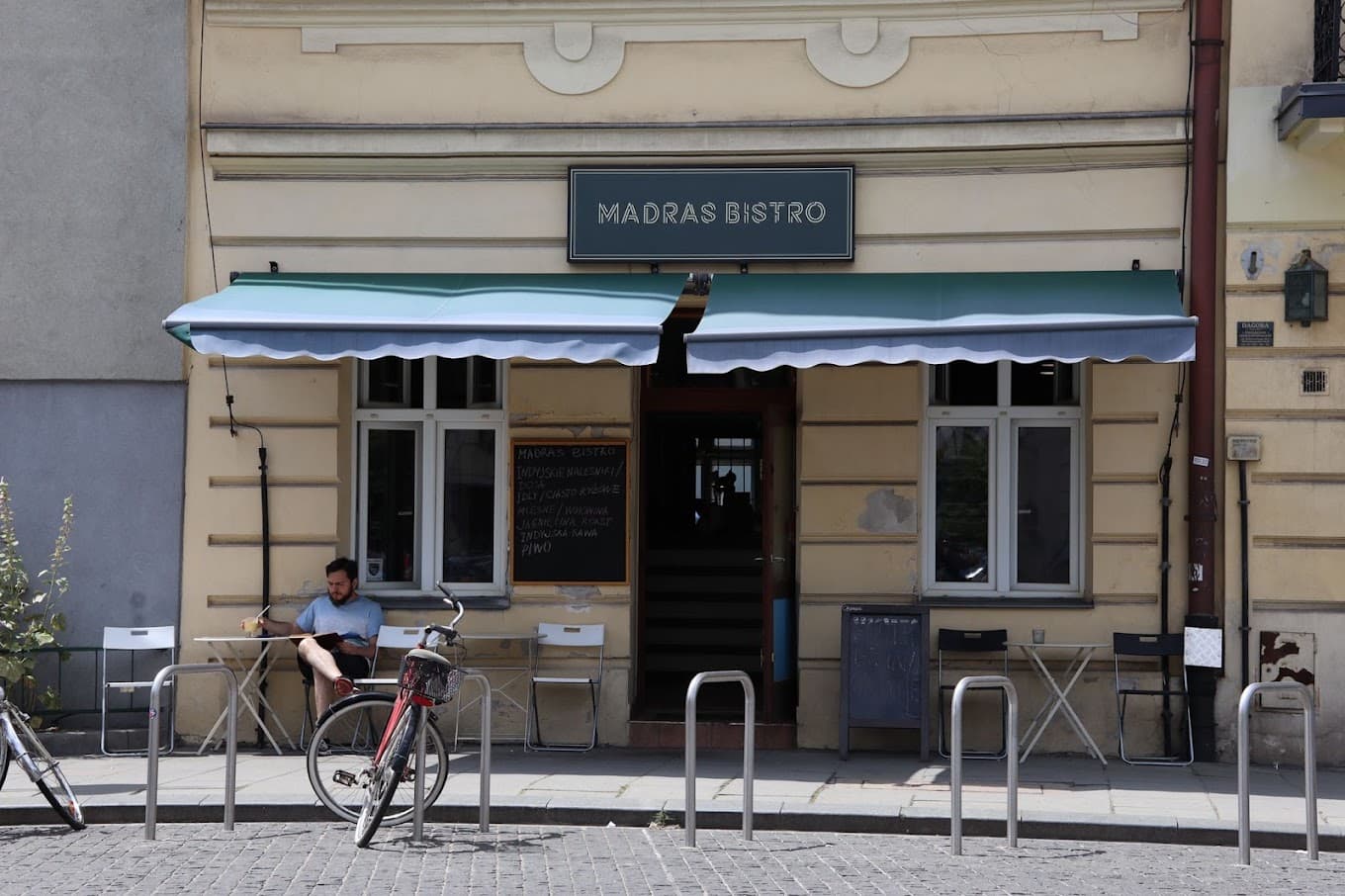
Why this matters at Madras Bistro
When we cook Kerala dishes in Kraków, we are not chasing novelty. We are chasing that same balance: coconut’s softness, curry leaf perfume, slow-built spice, and food meant to be shared.
If you have never tasted Kerala cooking, start simple. Order something with coconut milk, listen for curry leaves in the aroma, and eat slowly. The banana leaf may be missing — but the story on the plate should still feel like the Malabar coast found its way north.
Hungry for the real thing? Explore our menu, or book a table and ask us what Kerala specials are in the kitchen today.