
What Is South Indian Cuisine?

If you’ve only ever had Indian food as butter chicken, naan, and tikka masala, South Indian cuisine can feel like discovering a whole new country on a plate. It is lighter, brighter, and built around rice, lentils, coconut, curry leaves, tamarind, and spice — not heavy cream sauces.
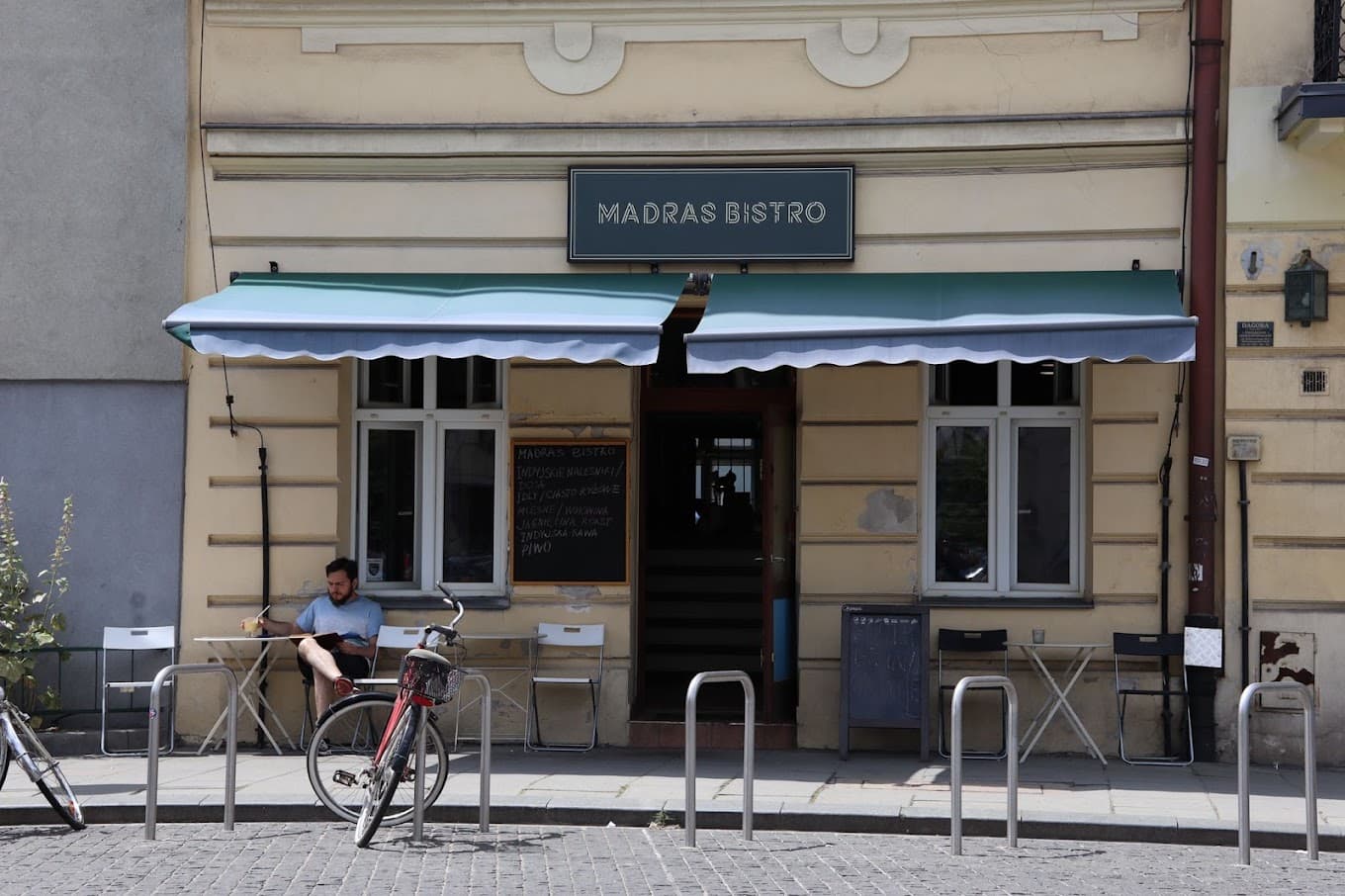
At Madras Bistro in Kraków, this is the food we cook every day: true to the taste of South India, prepared with traditional recipes and served with traditional plating.
Where South Indian food comes from
South Indian cuisine is the cooking of Tamil Nadu, Kerala, Karnataka, Andhra Pradesh, Telangana, and neighbouring regions such as Sri Lanka. Each state has its own character:
- Tamil Nadu — dosas, idlis, sambars, and sharp, aromatic spice blends
- Kerala — coconut, curry leaves, seafood traditions, Malabar parotta, and fragrant meat curries
- Karnataka — softer dosas, distinctive spice mixes, and everyday home-style dishes
- Andhra Pradesh & Telangana — bold heat, tangy notes, and unapologetically spiced gravies
Together they form one of the world’s great vegetarian-friendly food cultures — and one of its most expressive spice kitchens.
How it differs from North Indian food
Most Indian restaurants in Poland serve North Indian or Punjabi-inspired dishes: creamy curries, tandoor breads, and rich gravies. South Indian food is different in almost every way.
- North Indian food often means wheat (naan, roti), cream, tomato-onion gravies, and tandoor cooking.
- South Indian food often means rice and lentils, fermentation, coconut, tamarind, mustard seeds, curry leaves, and tempering spices in hot oil (tadka).
That is why a masala dosa with sambar and chutney tastes nothing like butter chicken with naan — and why guests who “know Indian food” are often surprised at Madras Bistro.
The dishes that define the cuisine
You do not need to know every regional specialty to understand the soul of South Indian cooking. A few pillars say it clearly:
Dosa
A thin, crisp crepe made from fermented rice and lentil batter. Plain, masala, ghee, Mysore, egg, cheese — dosa is South India’s most iconic street and restaurant food.
Idli
Soft, steamed rice-and-lentil cakes. Gentle, comforting, and almost always served with sambar and coconut chutney.
Malabar parotta
A flaky, layered flatbread from Kerala — golden outside, soft inside — perfect with curry.
Curries
South Indian curries are not one sauce. They can be coconut-based, pepper-forward, tomato-tamarind bright, or slow-roasted with curry leaves and whole spices. Vegetarian classics sit beside Kerala chicken, beef, and lamb preparations.
Around these pillars you will also find uttapam, vada, idiyappam, sambar, rasam, biryani, and desserts such as payasam — the wider family of the cuisine.
Fermentation, spice, and balance
Two ideas sit at the heart of South Indian cooking.
First, fermentation. Dosa and idli batter is left to ferment, which creates lightness, depth, and that slight tang people fall in love with.
Second, balance. Heat is only one note. A good South Indian plate moves between sour (tamarind, tomato), aromatic (curry leaves, mustard seeds), earthy (lentils), fresh (coconut, coriander), and crisp or soft textures on the same table.
That is also why spice level can be adjusted. Authentic does not have to mean painful. Tell your server mild, medium, or authentically spiced — the kitchen can meet you there.
Why it matters in Kraków
When Madras Bistro opened in 2018, it became Poland’s first authentic South Indian restaurant. North Indian food already had a place here. Dosas, idlis, Malabar parotta, and the lighter spice traditions of the South did not.
Our aim has stayed the same: cook food true to the taste of South India, and serve it the traditional way — so a first-time guest in Kraków can understand the cuisine the way it is enjoyed at home.
Come taste the difference
If South Indian food is new to you, start simple: a masala dosa, soft idlis with sambar, Malabar parotta with curry. From there, the map opens quickly — Mysore dosa, pepper fry, Kerala chicken, payasam.
South Indian cuisine is not “Indian food with more chilli.” It is its own world: fermented batters, coconut and curry leaves, rice and lentils, and plates built for sharing, dipping, tearing, and going back for one more bite.
Visit us at Plac Bohaterów Getta 2, browse the menu, or book a table — and taste South India in the heart of Kraków.